AI agents are more than just smart chatbots. In May 2026, the Hochschulforum Digitalisierung published a widely discussed paper on “Agentic AI in the Higher Education System” — and it hits on what many university administrators already sense: the next wave of AI integration is not about interactively answering questions in a chat, but about goal-oriented execution of tasks using available tools. Predefined AI workflows are helpful here, but even without them, the agent searches for a solution, monitors states, acts autonomously, and triggers actions in campus management. This will affect administrative processes more than students directly. What does this mean for campus management?
Chatbot vs. Agent: A Fundamental Difference
A chatbot responds. An AI assistant follows a workflow. And an AI agent? An AI agent acts. That sounds simple, but it is the crucial difference. While a chatbot reacts to a question and then waits, an AI agent can receive a task, independently plan and execute multiple steps — and in doing so, access data, systems, tools, and other agents. It operates essentially like an employee.
Concretely: A chatbot says “Your exam registration deadline is March 15.” An AI agent independently checks whether all prerequisites are met, enters the registration, sends a confirmation, and notifies the examination office — without a human having to trigger each step.
What Does This Mean for Campus Management?
In university operations, there are many processes that still run manually or semi-automatically today — processes that are perfectly suited for AI agents:
- Exam registration with prerequisite checking: The agent independently verifies whether participation requirements are met, and automatically registers the student — or escalates borderline cases to a human administrator.
- Document management: Incoming applications are classified, routed, and — where possible — directly processed, before a human provides final approval.
- Timetable optimization: Based on room availability, lecturer schedules, and student numbers, the agent generates planning proposals or directly reassigns rooms.
- Student support tasks: Early warning system for declining attendance or impending exam failures — including automatic notification to programme directors.
- FAQ and service communication: Frequently asked questions are answered fully and in context, without tying up secretariat capacity.
- Programme setup: Module handbooks are reviewed and transferred into campus management including schedules and lecturers, who are informed and contacted as needed.
- General press monitoring: Search for interesting topics for our social media presence, send us 3 proposals each week and draft text and image for Instagram — posting after approval.
Crucially: the agent acts within clearly defined boundaries and with human oversight. It is not merely a responder or assistant — the agent is a decision-maker. And every decision must be traceable after the fact (Explainable AI).
TraiNex and AI Agents: WAAS — Workforce as a Service
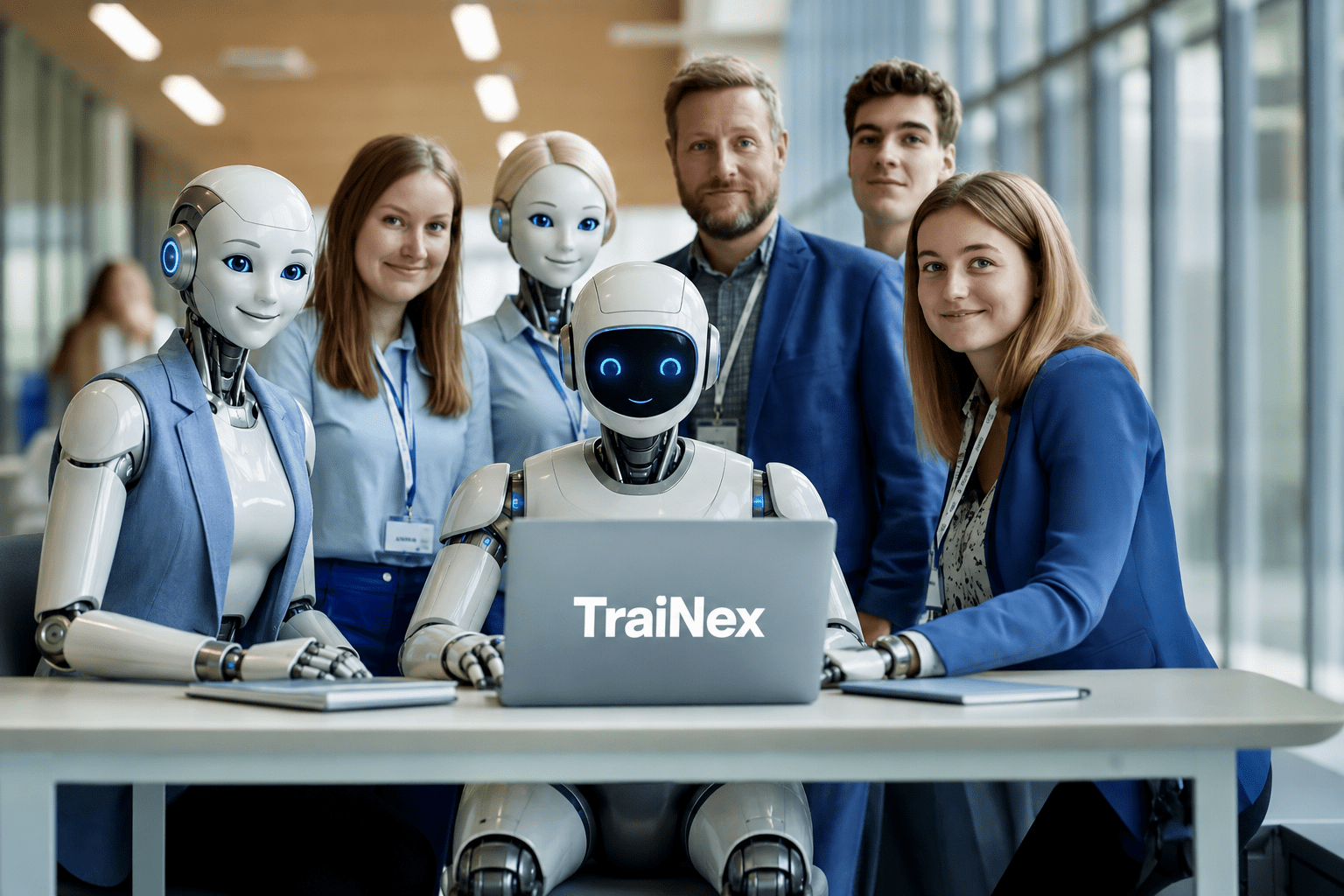
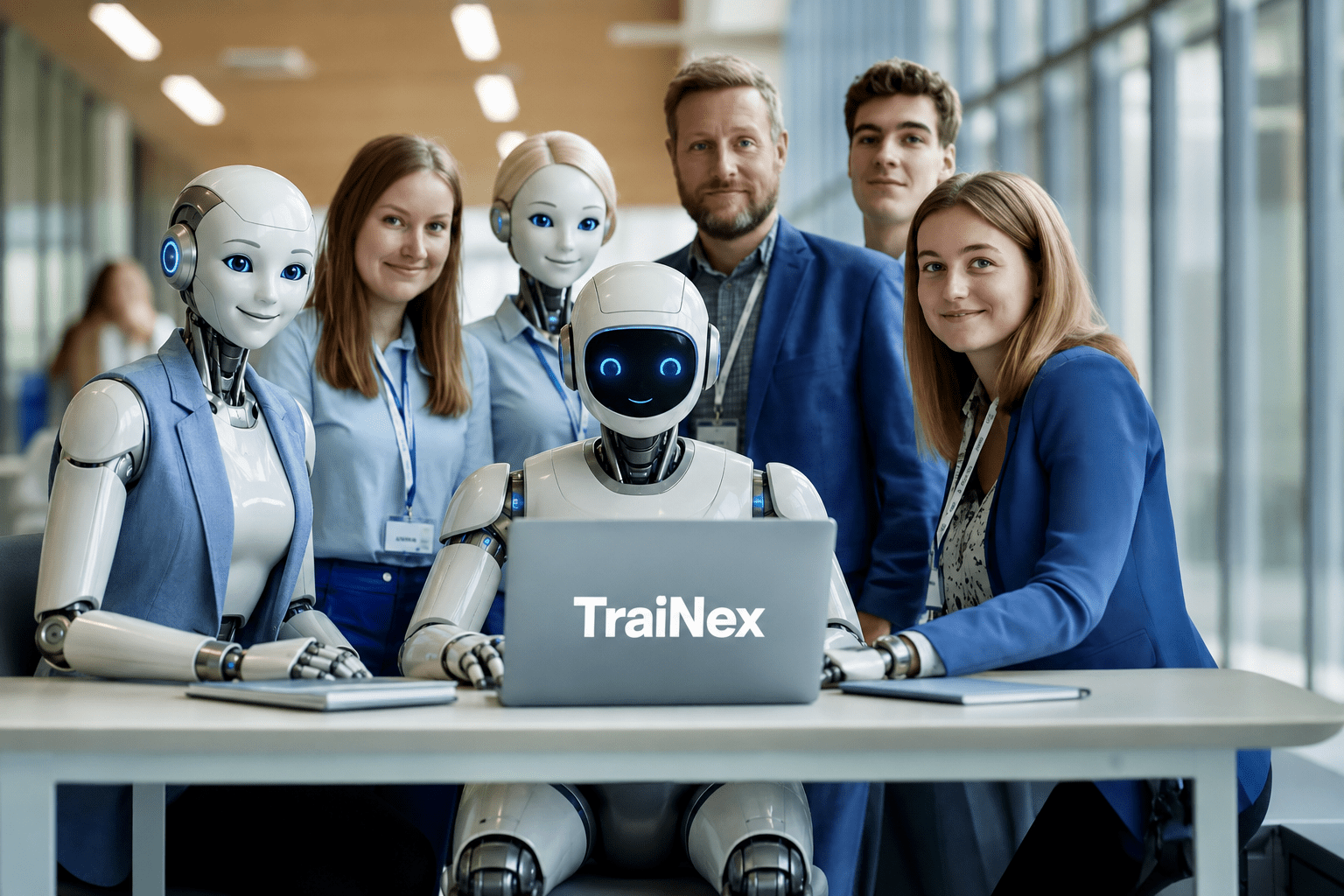
At TraiNex, we are developing this approach further under the concept of WAAS — Workforce as a Service. The idea: AI agents receive onboarding, a workplace, computer and email address, as well as a TraiNex account with assigned permissions. The TraiNex AI agent takes on defined task packages in campus management, acting in its own name on behalf of the institution — documented, traceable, and compliant.
Initial real-world tests have been very successful. TraiNex AI agents respond to emails, read attachments, enter data, or check lists — typically overnight, either automatically or on demand. The TraiNex AI agents know TraiNex’s functions inside and out. There is a team of AI agents guided by an AI team leader, who also assigns tasks to humans when necessary — for example, to make a phone call. Curious? More at waas.ki-campus.eu
Conclusion
AI agents are no longer a science-fiction concept. They will fundamentally transform campus management systems in the coming months — as digital employees who initially take over routine tasks. Universities that engage with this now and test legally compliant use cases will be well positioned in the competition.