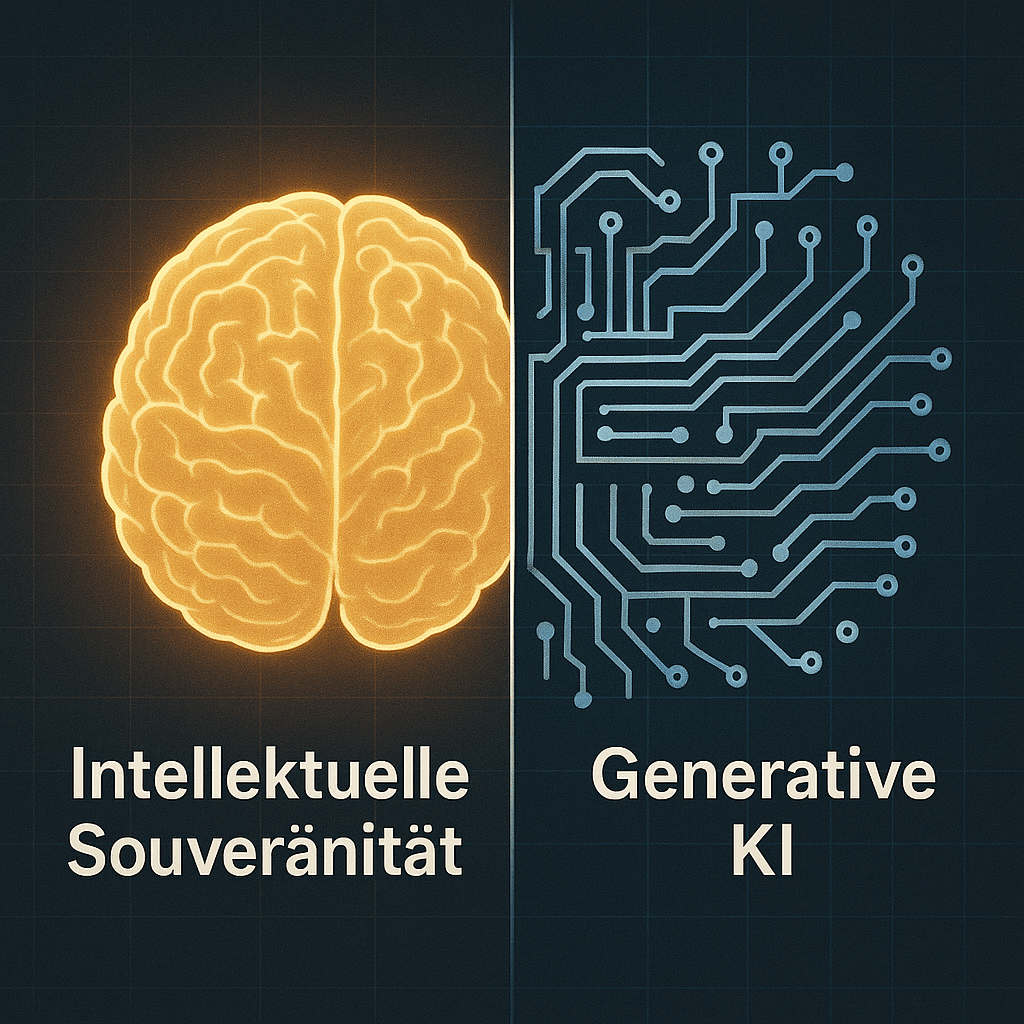
On July 6, 2026, Germany’s Wissenschaftsrat (Science Council) published its recommendations “Intellectual Sovereignty: Recommendations for Higher Education in Times of Generative AI” — nine concrete calls to action for universities, faculty, students, federal states, and the national government. Reading through them, one thought kept recurring: this is exactly what we’re building with TraiNex and SMARTA.
What the Science Council is calling for
“Critical thinking cannot be delegated to an AI,” says Council chair Wolfgang Wick. This isn’t technophobia — it’s precision. It defines what AI should do, and what it must not. The Science Council calls on universities to build AI competencies while also anchoring AI-free zones in curricula. Assessment formats should be rethought, universities preserved as social learning environments. And: sovereign AI infrastructures should be developed that work across institutions and are financed on a long-term basis.
Not as much AI as possible — but the right AI
Not as much AI as possible, but AI deployed deliberately — with the right context, for faculty, students, and university administration. For us, this means advancing context engineering: the intelligent connection of AI to each individual user’s current situation. Automatic consideration of academic records, curricula, exam regulations, timetables, and today’s lecture content. To achieve this, we connect generative AI with our algorithmic intelligence, directed by agents.
Context Engineering as the answer
An AI that automatically considers a student’s academic standing, their curriculum, their exam regulations, and today’s lecture content is not an uncontrolled black box — it’s a precise tool with a defined context. That is the core of SMARTA: not generative AI that simply responds, but AI that draws the right context from the campus management system. Study progress, curricula, exam regulations, timetables, today’s lecture notes — all of this defines the frame within which the AI operates.
Conclusion
The Science Council has set an important framework. For universities that want to deploy AI deliberately — with control, context, and competence — TraiNex shows what that looks like in practice.